
The lost mountain tōtara forests of Central Otago
For anyone who lives in or visits Central Otago, when asked to visualise the iconic landscapes now immortalised by landscape painters and photographers, it would almost certainly be defined by endless vistas of golden tussock grassland. However, this is not how Central Otago once looked. Prior to human arrival in New Zealand, the slopes of the inner mountain ranges would have been cloaked with dense conifer forest. Subsequent use of fire by humans to help clear the land saw these forests go up in smoke, and only small remnants now survive in fire-sheltered gullies.
Understanding what these forests looked and felt like is a very difficult task due to the sheer scale of loss and the recurring effects on the landscape of introduced animals such as rabbits. We can however search for signs and these clues have intrigued European settlers since the 1850s. Tangible links to this forest are found in old tōtara logs, either lying on the ground or shaped into durable fence posts by earlier European farmers. Many of these logs may date to the first clearance of the conifer forests, around 700 years ago. The lack of branching on these old relictual logs suggests that the forest was originally a closed-canopy one, as trees will shed branches under shade, rather than a more open-savannah type feel that one encounters in the remnants today.
Mountain tōtara has inbuilt chemical defences in its bark, leaves, and seeds, which makes it almost impervious to fungal attack, particularly in the dry climate of Central Otago. Under limited rainfall and harsh winters, these trees grew slowly, but for hundreds of years, resulting in a very dense wood. Lack of water kept tree heights to around 10 m in the canopy in the driest of places, but each year they added another layer around the trunk, becoming ever larger in circumference. Old cut stumps can sometimes reach over 1 m across, and these trees were probably up to 1,000 years old.
Other clues in the landscape can help us reconstruct these forests. Charcoal swept down from the mountains after clearance by human-induced fire can allow a degree of determination to at least genus, if not species, of tree. Work in the mid-20th century by keen charcoal-hunting botanists showed that mountain tōtara (now Podocarpus laetus) dominated the charcoals, but other montane conifers of celery pine/mountain toatoa (Phyllocladus alpinus) and bog pine (Halocarpus bidwillii) were part of this forest. These conifer species are tough when compared against the New Zealand climate, tolerating temperatures down to -23 degrees Ceslius. They are also remarkably drought resistant, adapting their leaves to slow water loss during times of extended summer droughts that characterise Central Otago.
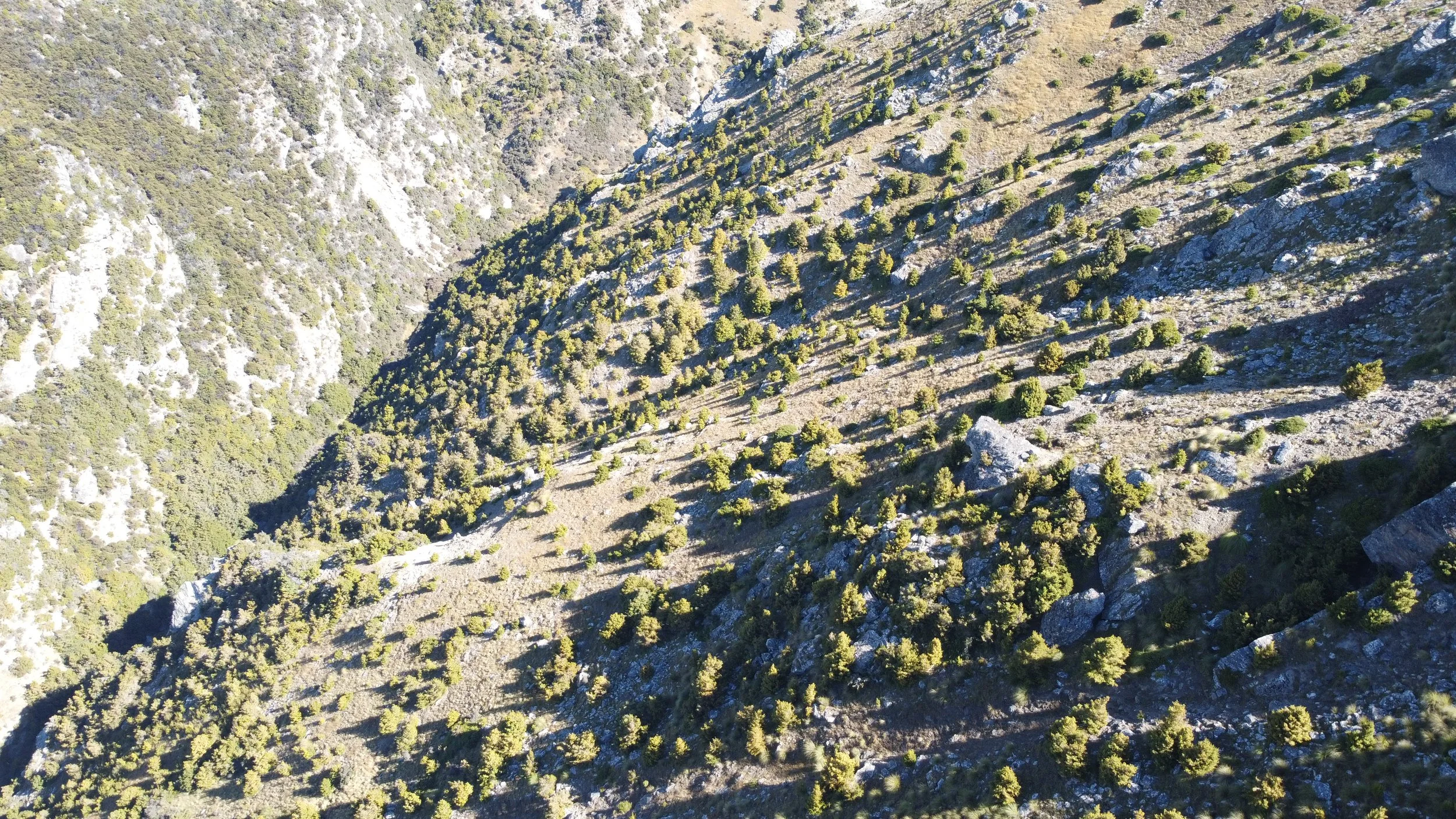
Rewilding totara in Central Otago during the present day
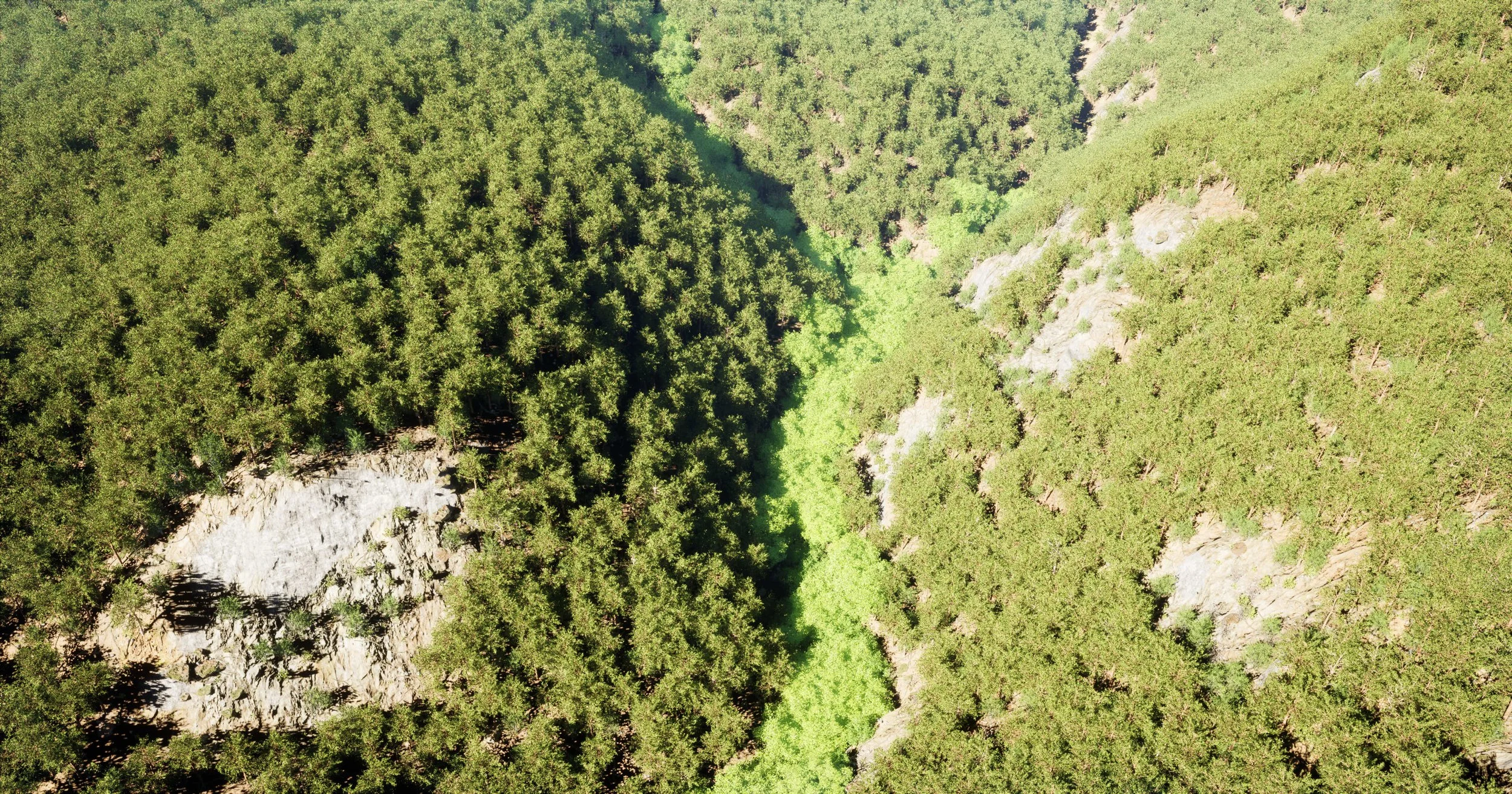
Digital reconstruction of the same valley above showing an idea of what the valley once might have looked like
While dominated by shade-tolerant and long lived conifers, these inner montane forests would have had scattered mixtures of smaller-leaved, but faster growing, angiosperm trees and shrubs. One of the few deciduous species found in New Zealand, mountain lacebark (Hoheria glabrata) would have grown along creek edges. Shedding its leaves during the harsh mountain winters would have helped prevent damage during heavy frosts, and possibly being eaten by hungry birds. Divaricating shrubs and small trees such as Coprosma, Olearia (tree daisy’s), and Myrsine, evolved to tolerate both climatic extremes of drought, heat, and cold, along with moa browsing. In some more sheltered places with sufficient moisture, riparian strips of silver beech (Lophozonia menziesii) forest would have persisted even in areas where climatic extremes of hot and cold almost completely limited forest cover. What is now left provides only a mere suggestion of what these forests once were.
Excavation from dry rock-shelters in the river gorges of Central Otago and from archaeological sites show that this landscape was one dominated by birds before human arrival. The ubiquitous but now extinct moa (Dinornithiformes) had several different species, indicating adaptation to a range of different environments. The larger, heavier moa likely favoured the more open alluvial plains now characterised by vineyards and housing developments. Smaller moa species would have been better adapted to the closed montane forests, hiding from aerial predators such as the Haast eagle/pouākai (Hieraaetus moorei). A wide range of other bird species would have been found in these forests, including the now highly threatened kākāpō (Strigops habroptilus). While now confined to off-shore islands, this slow-growing bird may have been able to harvest vast amounts of tōtara seed in these mountains to allow the females to provide enough nutrients for breeding. Seed from other shrubs and trees would have provided a nutritional boost in summer and autumn to help support large numbers of bird species. It would have been a noisy place, even at night.
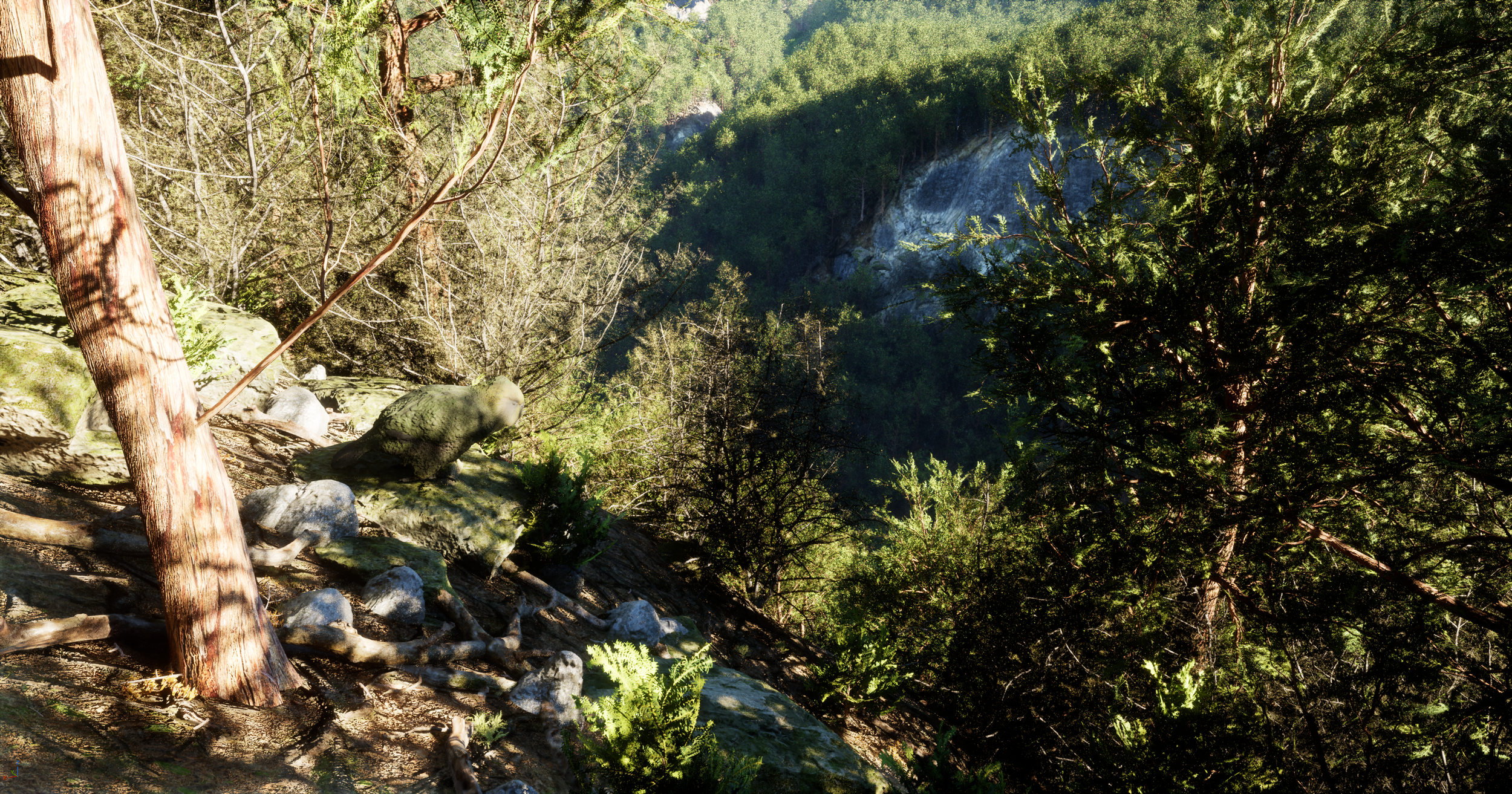
Reconstruction of mountain totara forest for how it might once have been
Using what clues we still have, the digital reconstruction of this lost mountain tōtara forest can begin to be re-imagined. LiDAR coverage through parts of Central Otago allows the mountainous landscapes to be accurately rebuilt. While the mountain ranges are weathering, the last 1,000 years of uplift and erosion is unlikely to have changed the landscape in any significant way. We know that there were likely ribbons of riparian species growing in narrow bands along the creeks. A small number of shade-tolerant species can still be found as individuals that have survived through to present day and therefore were likely far more widespread. Aspect likely played an important role in sorting species niches into those that favoured colder but wetter south and east facing slopes, and those that could tolerate the drier but warmer north and west facing slopes. Density of trees in this closed-canopy forest would have to have been high enough to ensure straight limbed trunks near the ground, but restrictions in soil moisture created by the rain shadow effect of the mountains to the west would likely have made this forest feel drier and less dense, with fewer mosses and climbers through the forest.
In recent years the influx of people who desire to live in Central Otago and increasing knowledge of what the landscape once was, has seen efforts to help start restoring small parts of this forest. While much of the mountain slopes are now held under private ownership, there are publicly accessible reserves on some mountain ranges where these forest species persist. Mountain tōtara is a fantastic rewilding species, as it is hardy, grows almost anywhere, resists being eaten due to its prickly leaves, and can grow up to a 1,000 years old. Where sufficient trees survived in remnant patches, removal of fire as a form of landscape clearance has seen these trees begin to spread back out into some of their original range. The seeds are consumed by small birds such as tui (Prosthemadera novaeseelandiae) and bellbird/korimako (Anthornis melanura), allowing them to spread up and down mountain sides. While many other species that once grew alongside these mountain tōtara are locally extinct, they too can be brought back to the landscape through the efforts of landscape-scale restoration planting. Future challenges will lie in helping remove the introduced weeds and browsing animals to help accelerate the restoration, at least in part, of these once mighty mountain forests.